Designing a Starter Solar + Battery Plan That Keeps Essentials Running
On a tight budget, resilience starts with a clear plan: identify what you must have daily, choose a compact, expandable battery setup, and size the solar array to cover those loads today while leaving room to grow later.
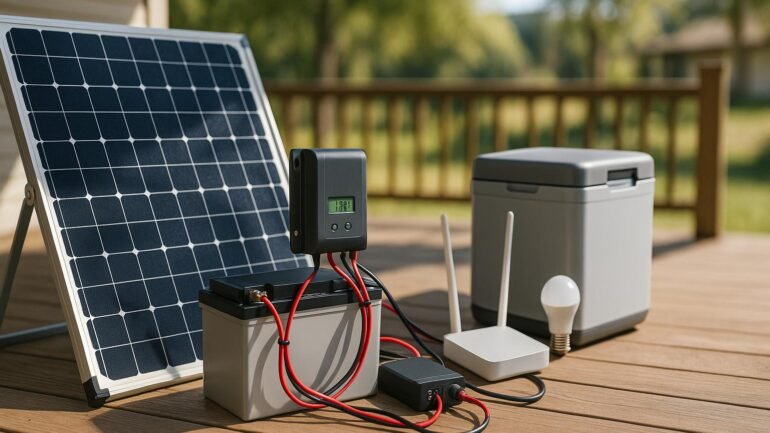
Begin with a practical loads list. Typical essentials include a small refrigerator or cooler, LED lighting, and a home-office router or modem. A Wi‑Fi access point or small laptop charger might be needed for remote work. For many DIY setups, a modest 12V refrigerator and a handful of LED lights consume most of the daily energy, so nailing their runtime is the first step. To see a practical, budget-friendly starting point, check out the starter guide for solar+battery planning.
Next, size a scalable battery bank. A common first approach is a small LiFePO4 or lead-acid bank that can deliver a few hundred watt-hours to start, with a plan to add capacity as your budget allows. Focus on ensuring the battery can handle the daily energy budget with a comfortable margin and overnight autonomy if needed. For a structured approach to prioritizing loads, see critical loads sizing.
Layout for growth. A simple, expandable topology keeps costs predictable: one charge controller and inverter with room to add panels and batteries later. Start with a compact panel(s) that cover the daily needs, then add a second panel or a second battery bank as funds allow. For a concrete example of a compact system that still powers daily essentials, explore compact solar system designs.
If your goal includes a small home office, you’ll want a backup plan that doesn’t complicate your space. A no-fuss approach has worked well for many DIY setups and can be scaled with your budget. See home office backup plan for concrete ideas.
Key steps to design your starter plan
- Define essential loads and daily energy budget
- Choose a scalable battery bank with room to grow
- Size an expandable solar layout that covers today and future needs
- Plan for simple additions (panel or battery) as funds allow
Putting it all together, the key is to balance today’s essential loads with a clear, scalable growth path. Start with a defined daily energy budget, choose a modest but upgradeable battery, and size the solar to meet that budget while leaving headroom for future expansion. With each upgrade, re‑evaluate loads and margins to keep the system affordable while protecting essential power.