Proper solar cleaning maintenance directly impacts your system’s energy output and longevity. Whether you’re powering your home or RV, dirty panels can reduce efficiency by 15-25%. This comprehensive guide covers safe techniques, essential tools, and maintenance schedules to keep your investment performing at peak levels.
Why Solar Cleaning Matters for System Performance
Dust, bird droppings, and environmental debris create barriers that block sunlight from reaching your solar cells. Even a thin layer of dust can significantly reduce power generation. Additionally, uneven soiling can create hot spots that damage panel components over time.
Regular cleaning prevents these issues while extending your system’s lifespan. Clean panels also help you identify potential problems like micro-cracks or loose connections. Furthermore, maintaining optimal efficiency means faster payback on your solar investment.
The frequency of cleaning depends on your environment and installation type. Desert locations and areas with heavy traffic require more frequent attention. Meanwhile, systems in rainy climates often need less manual cleaning due to natural washing.
Essential Tools for Safe Solar Panel Maintenance
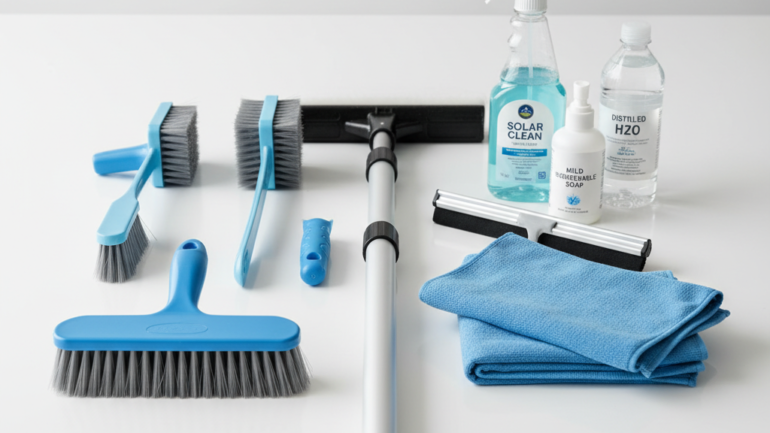
Start with a soft-bristled brush or squeegee designed for delicate surfaces. Avoid abrasive materials that can scratch protective glass coatings. A telescoping handle allows you to reach panels safely from ground level.
Use only distilled or deionized water to prevent mineral deposits on panel surfaces. Moreover, add a few drops of mild dish soap for stubborn dirt. Commercial solar cleaning solutions are available but unnecessary for most situations.
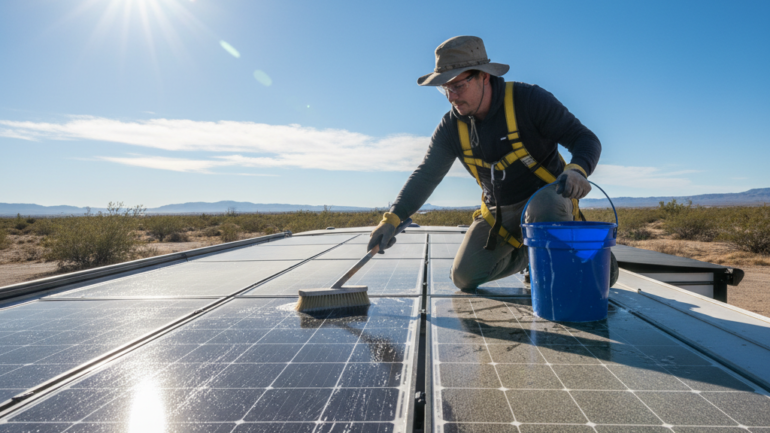
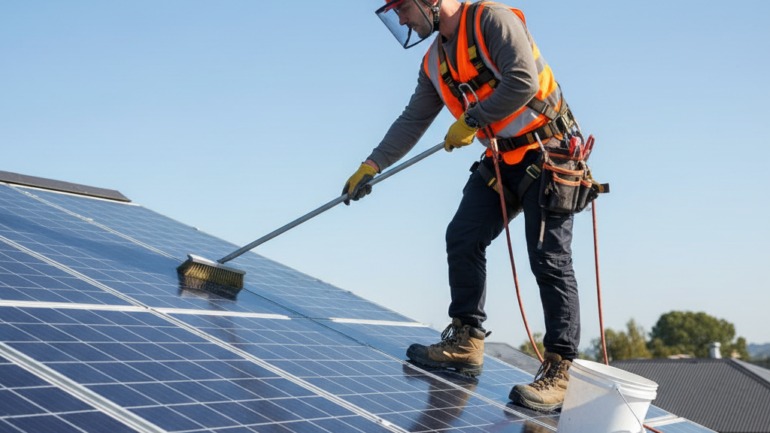
Safety equipment is crucial for rooftop installations. Consequently, invest in non-slip shoes, a safety harness, and proper ladder techniques. For RV systems, ground-level access makes cleaning much safer and easier.
A garden hose with adjustable spray settings provides gentle rinsing capability. However, avoid high-pressure washers that can damage seals and electrical connections. Microfiber cloths work well for spot cleaning and final drying.
Step-by-Step Solar Cleaning Techniques
Begin cleaning during cooler parts of the day to prevent rapid water evaporation. Early morning or late afternoon provides optimal conditions. Turn off your system before starting any maintenance work for safety.
Rinse panels thoroughly with clean water to remove loose debris first. This prevents scratching when you begin scrubbing. Work from top to bottom to avoid re-soiling cleaned areas.
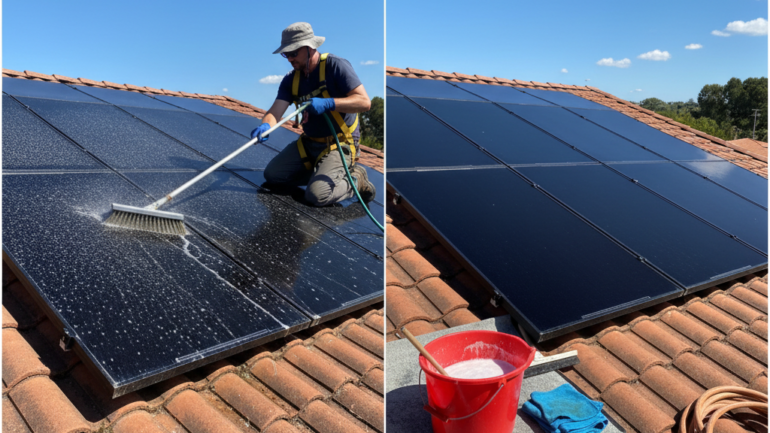
Apply soapy water using your soft brush in gentle, circular motions. Pay special attention to corners where dirt tends to accumulate. Rinse frequently to prevent soap residue buildup.
Finish with a thorough rinse using clean water. Subsequently, allow panels to air dry or use a clean squeegee for streak-free results. Inspect for any damage or loose connections while cleaning.
Cleaning Frequency and Seasonal Considerations
Most residential systems benefit from quarterly cleaning schedules. However, seasonal sun hours and local conditions may require adjustments. Monitor your system’s output to determine optimal timing.
Spring cleaning removes winter accumulation of leaves and debris. Summer requires more frequent attention due to dust and pollen buildup. Fall cleaning prepares panels for winter weather challenges.
Winter presents unique challenges with snow and ice formation. Never attempt to remove snow with sharp tools that can damage panels. Instead, allow natural melting or use a soft brush for light accumulation.
RV solar systems need cleaning after each trip or monthly during active use. Road dust and camping environments expose panels to more contaminants. Therefore, portable systems require more frequent maintenance than stationary installations.
Common Solar Cleaning Mistakes to Avoid
Never clean hot panels during peak sun hours as thermal shock can crack glass. Water evaporates too quickly, leaving mineral spots and soap residue. Consequently, timing your cleaning sessions prevents these issues.
Avoid harsh chemicals, abrasive cleaners, or rough scrubbing materials. These substances can damage anti-reflective coatings and reduce panel efficiency permanently. Stick to mild, pH-neutral cleaning solutions only.
Don’t neglect safety protocols when accessing rooftop installations. Falls cause serious injuries and damage to both panels and property. Always use proper safety equipment and consider professional services for difficult locations.
Skipping regular inspections during cleaning misses opportunities to catch problems early. Look for loose connections, cracked glass, or damaged mounting hardware. Early detection prevents costly repairs and system downtime.
Professional vs. DIY Solar Maintenance
DIY cleaning works well for accessible ground-mounted or RV systems. These installations allow safe, easy access without specialized equipment. Furthermore, regular DIY maintenance helps you learn your system’s normal operation.
Professional services make sense for complex rooftop installations or multi-story buildings. They have proper safety equipment and insurance coverage for high-risk situations. Additionally, professionals can identify technical issues beyond basic cleaning.
Consider your comfort level with heights and physical demands of panel access. Safety checks should never be compromised for cost savings. Some hybrid approaches combine DIY ground work with professional rooftop service.
Cost considerations include equipment investment versus service fees over time. Calculate the total cost of tools, safety equipment, and your time value. Compare this against professional service rates in your area.
Maximizing Efficiency Through Proper Maintenance
Clean panels are just one aspect of optimal solar system performance. Regular maintenance should include checking connections, monitoring output, and inspecting mounting hardware. This comprehensive approach ensures maximum energy production.
Document your cleaning schedule and system performance to identify patterns. Track energy output before and after cleaning sessions. This data helps optimize your maintenance routine and identify potential problems.
Combine cleaning with other system checks for efficiency. Inspect inverters, batteries, and wiring during maintenance visits. Understanding your system basics helps you maintain it more effectively.
Proper solar cleaning is an investment in your system’s long-term performance and your energy independence. Regular maintenance prevents costly problems while maximizing your return on investment. Start implementing these techniques today to keep your solar investment performing at its peak potential.