Proper battery maintenance can dramatically extend your solar power system’s lifespan, whether you’re powering your home or RV. Most DIY enthusiasts overlook these simple practices that could double their battery bank’s useful life. Furthermore, consistent maintenance prevents costly replacements and ensures reliable power when you need it most. Let’s explore five essential techniques that will keep your batteries performing optimally for years.
Understanding Your Solar Battery’s Lifespan Potential
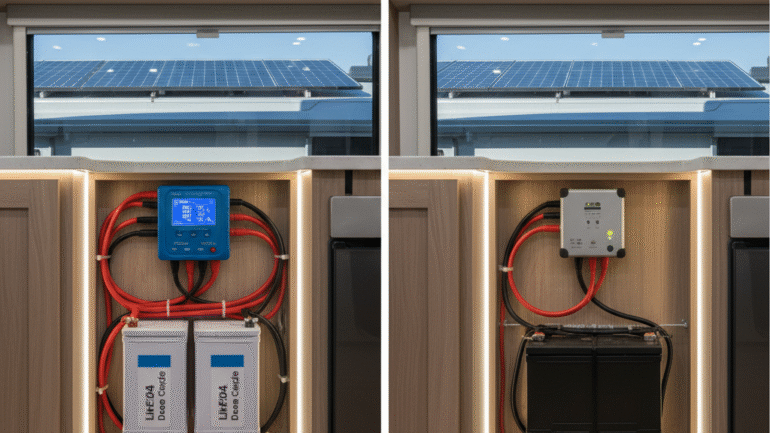
Solar batteries typically last 3-15 years depending on type and care quality. Lead-acid batteries require more frequent attention than lithium options. However, both battery types benefit significantly from proper maintenance routines. Additionally, understanding your power consumption helps optimize charging cycles effectively.
Temperature extremes pose the greatest threat to battery longevity across all types. Cold weather reduces capacity while excessive heat accelerates chemical breakdown. Moreover, improper charging practices can permanently damage internal components. Consequently, implementing preventive measures protects your investment substantially.
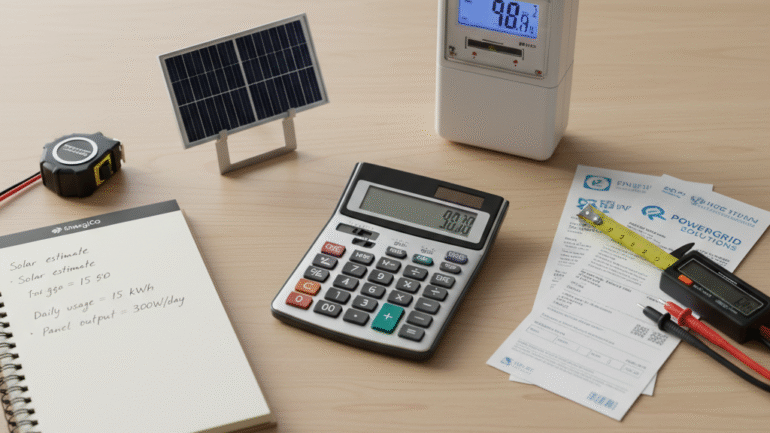
Regular monitoring reveals potential issues before they become expensive problems. Simple voltage checks provide valuable insights into battery health trends. Furthermore, documenting performance patterns helps predict replacement timing accurately. Your Personal Solar Load Map can help you understand how your usage affects battery wear patterns.
Tip 1: Master Proper Charging Cycles for Battery Maintenance
Avoiding deep discharges significantly extends battery life across all technologies. Lead-acid batteries should never drop below 50% state of charge regularly. Meanwhile, lithium batteries handle deeper discharges better but still prefer partial cycles. Therefore, sizing your system properly prevents harmful over-discharge situations.
Overcharging creates equally damaging effects through excessive heat and gas production. Quality charge controllers prevent most overcharge scenarios automatically. However, monitoring voltage levels during bulk charging phases remains important. Subsequently, adjusting charge settings seasonally optimizes performance throughout the year.
Float charging maintains full batteries without causing damage during extended periods. This technique proves especially valuable for seasonal RV storage situations. Additionally, periodic equalization charges balance individual cells in lead-acid banks. Nevertheless, always consult manufacturer specifications before implementing equalization procedures.
Optimal Charging Voltage Settings
Lead-acid batteries require 14.4-14.8 volts for bulk charging phases typically. Float voltages should remain between 13.2-13.8 volts for maintenance charging. Conversely, lithium batteries use lower voltages around 14.2-14.6 volts maximum. Therefore, programming charge controllers correctly prevents premature battery degradation.
Tip 2: Temperature Management Strategies
Maintaining batteries between 32-80°F optimizes performance and lifespan significantly. Extreme temperatures reduce capacity and accelerate aging processes dramatically. Furthermore, temperature compensation adjusts charging voltages automatically in quality systems. Installing batteries in climate-controlled spaces provides the best protection possible.
Insulation boxes help moderate temperature swings in unheated spaces effectively. Ventilation prevents dangerous gas buildup while maintaining reasonable temperatures. Additionally, battery blankets provide warming in extremely cold climates safely. However, avoid direct heating sources that create hot spots or fire hazards.
RV installations present unique temperature challenges requiring creative solutions often. Basement compartments offer better protection than exterior storage typically. Moreover, thermal barriers reduce heat transfer from engine compartments substantially. Winter-Proofing Your Starter System covers comprehensive cold-weather protection strategies.
Seasonal Temperature Considerations
Winter reduces battery capacity by 20-50% depending on severity and type. Charging voltages require adjustment upward to compensate for cold temperatures. Summer heat accelerates self-discharge rates and shortens overall lifespan significantly. Therefore, seasonal maintenance routines address these changing conditions proactively.
Tip 3: Monthly Inspection and Cleaning Protocols
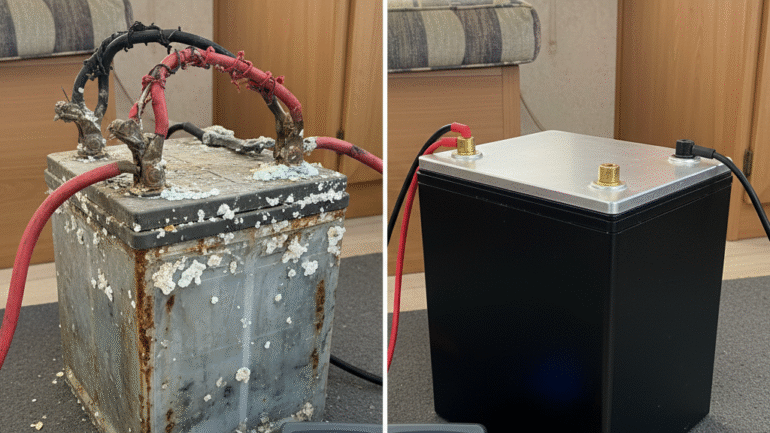
Visual inspections reveal corrosion, leaks, and connection issues before they worsen. Clean terminals monthly using baking soda solution and wire brushes carefully. Subsequently, apply petroleum jelly or terminal protectant to prevent future corrosion. Additionally, check mounting hardware for looseness that could cause vibration damage.
Flooded lead-acid batteries require electrolyte level monitoring and maintenance regularly. Distilled water replaces evaporation losses but never add acid directly. Furthermore, specific gravity testing indicates individual cell health accurately. However, sealed batteries eliminate most maintenance requirements while sacrificing some performance potential.
Connection tightness affects system efficiency and safety substantially over time. Loose connections create resistance, heat, and potential fire hazards gradually. Moreover, thermal cycling expands and contracts metals causing gradual loosening. Therefore, quarterly torque checks maintain optimal electrical connections consistently.
Essential Cleaning Supplies
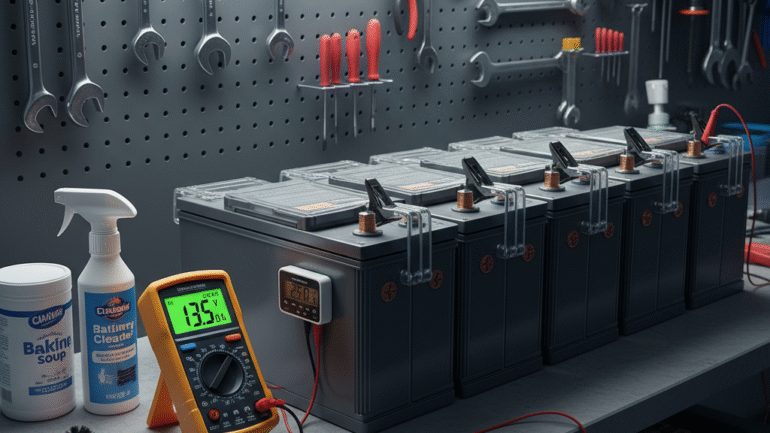
Keep baking soda, distilled water, and wire brushes readily available. Digital multimeters enable accurate voltage and specific gravity measurements. Additionally, safety equipment including gloves and eye protection prevents injury. Quality terminal protectants reduce future maintenance requirements significantly.
Tip 4: Load Management and System Optimization
Preventing excessive discharge cycles through efficient appliance selection extends battery life. LED lighting and efficient refrigeration reduce daily power consumption substantially. Furthermore, phantom loads from standby devices drain batteries continuously. Efficiency First: Cutting Your Solar Needs Before You Buy explains how reducing consumption improves battery longevity.
Load prioritization systems disconnect non-essential devices during low battery conditions. These automatic systems prevent harmful deep discharge scenarios reliably. Additionally, battery monitors provide real-time consumption data for optimization efforts. Subsequently, adjusting usage patterns based on solar production maximizes efficiency.
Inverter efficiency affects battery drain rates significantly during AC power conversion. Pure sine wave inverters typically offer better efficiency than modified versions. Moreover, sizing inverters appropriately prevents excessive idle consumption continuously. Therefore, matching inverter capacity to actual loads optimizes system performance.
Smart Load Management Devices
Programmable timers reduce phantom loads from electronics and chargers automatically. Smart switches enable remote control and scheduling of non-essential devices. Additionally, battery protection devices disconnect loads before dangerous discharge levels. These automation tools simplify battery maintenance while improving longevity substantially.
Tip 5: Documentation and Performance Tracking
Maintaining detailed records reveals performance trends and predicts maintenance needs. Monthly voltage logs identify declining batteries before complete failure occurs. Furthermore, tracking specific gravity readings shows individual cell deterioration patterns. Additionally, documenting environmental conditions helps correlate performance with external factors.
Digital battery monitors simplify data collection through automatic logging capabilities. These devices track voltage, current, and state-of-charge continuously. Moreover, smartphone apps enable remote monitoring and alert systems effectively. Subsequently, historical data supports warranty claims and replacement timing decisions.
Performance baselines established during initial installation provide comparison references later. Annual capacity tests verify actual versus rated performance objectively. Additionally, load testing identifies weak batteries within larger bank configurations. Therefore, systematic testing protocols maintain optimal system reliability consistently.
Essential Monitoring Parameters
Voltage readings indicate state-of-charge and overall battery health accurately. Current measurements show charging and discharge rates affecting longevity. Temperature logging correlates environmental factors with performance variations substantially. Subsequently, combining these metrics provides comprehensive battery health assessments.
Common Battery Maintenance Mistakes to Avoid
Mixing battery types or ages within banks creates imbalanced charging conditions. Newer batteries compensate for weaker units causing premature failure. Furthermore, inadequate ventilation allows dangerous gas accumulation in enclosed spaces. Additionally, using automotive chargers on deep-cycle batteries causes permanent damage.
Neglecting manufacturer specifications leads to voided warranties and shortened lifespans. Each battery chemistry requires specific charging profiles for optimal performance. Moreover, ignoring safety procedures creates electrocution and explosion hazards. Therefore, following established protocols protects both equipment and personal safety.
Inconsistent maintenance schedules allow small problems to become expensive failures. Regular attention prevents most battery issues from developing significantly. Furthermore, waiting until problems appear costs more than preventive maintenance. Subsequently, establishing routine schedules maximizes return on solar investments.
Seasonal Battery Maintenance Schedule
Spring preparation includes capacity testing and connection inspections after winter storage. Clean terminals and check electrolyte levels before increased usage begins. Additionally, update charge controller settings for warming temperatures gradually. Moreover, verify ventilation systems function properly for summer operation.
Summer monitoring focuses on temperature management and increased usage patterns. Check cooling systems and shade structures protecting battery compartments. Furthermore, adjust charging voltages downward to compensate for heat effects. Additionally, increase inspection frequency during peak usage periods.
Fall preparation involves winterization procedures and reduced usage adjustments. Clean and protect all connections before cold weather arrives. Moreover, insulate battery compartments and install heating systems if necessary. Subsequently, reduce float voltages and prepare for reduced solar production.
Winter maintenance emphasizes temperature protection and reduced capacity management. Monitor voltages more frequently as cold reduces available power. Additionally, avoid deep discharges that become more damaging in cold conditions. Therefore, adjust usage expectations based on seasonal capacity reductions.
Maximizing Your Solar Investment Through Proper Battery Maintenance
Implementing these five battery maintenance strategies can double your system’s lifespan easily. Regular attention prevents expensive replacements while ensuring reliable power consistently. Furthermore, proper care maximizes your solar investment’s return significantly. Additionally, well-maintained batteries provide better performance during critical situations.
Start with simple monthly inspections and gradually implement comprehensive monitoring systems. Document everything to track improvements and identify optimization opportunities. Moreover, seasonal adjustments keep batteries performing optimally year-round effectively. Therefore, consistent maintenance habits pay dividends through extended equipment life.
Remember that battery technology continues evolving with improved maintenance requirements constantly. Stay informed about manufacturer updates and industry best practices regularly. Furthermore, join solar communities to share experiences and learn from others. Subsequently, continuous learning ensures your system remains optimized and reliable long-term.