Low-Voltage, No-Roof Install: Portable Solar Ideas for Beginners
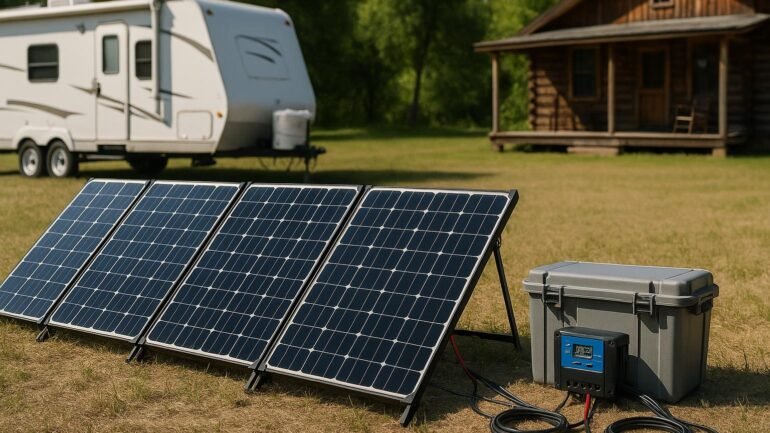
Starting with solar doesn’t have to involve risky climbs or complex roof work. This beginner-friendly guide focuses on no-roof, low-voltage setups that are portable, ground-ready, and scalable for both DIY homeowners and RV enthusiasts. Learn practical configurations you can deploy today and expand safely over time.
Why low-voltage, no-roof solar is ideal for beginners
Low-voltage solar runs at 12 or 24 volts and avoids high-voltage, grid-tied systems. No-roof means panels sit on the ground or in portable frames rather than being mounted to a roof. This combination keeps installation simple, safe, and highly adaptable.
What “low-voltage, no-roof” means
- Panels stay on the ground or in a portable frame, making setup and storage easy.
- Wiring runs at 12V or 24V DC with a compact charge controller.
- Batteries are kept in a safe, accessible location for straightforward maintenance.
Why it’s beginner-friendly for DIY homeowners and RV owners
- Lower risk and simpler hardware without roof penetrations.
- Flexible panel placement to chase sun, shade, or storms.
- Clear safety boundaries with lower voltages and simplified wiring.
- Fast, tangible results that you can test and learn from right away.
- Budget-friendly growth: start small and add capability over time.
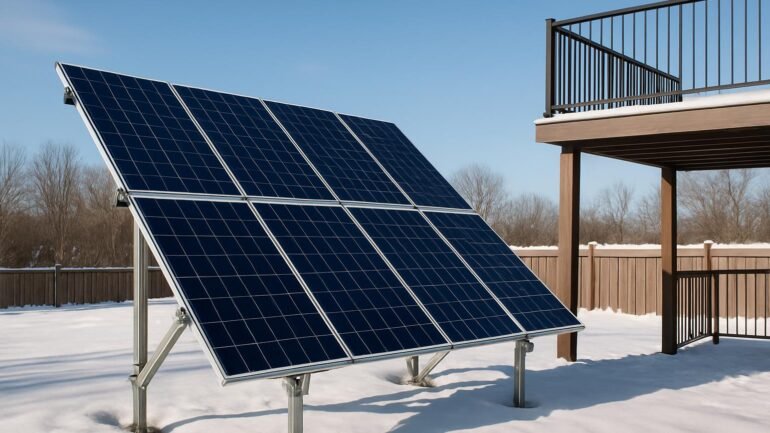
Ground-ready, portable layouts: panels on stands, wheels, and clear surfaces
Explore practical configurations that are portable, ground-ready, and easy to scale.
Simple configurations you can start with this week
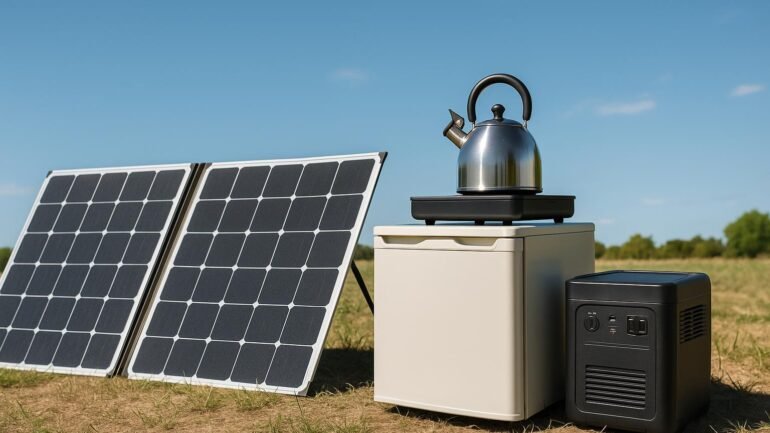
Config A — Starter portable kit for a small space
- Typical setup: 100–150W portable panel, 10A PWM controller, 12V battery (lead-acid or LiFePO4).
- Use case: Cabin, shed, or tiny camper needing a few lights and USB/cigarette-lighter outlet.
- What you’ll manage: One panel, one controller, one battery, simple DC wiring with fuses.
- Why it works: Low cost, quick setup, clear feedback on performance.
Config B — Ground-ready flexibility for RV or cabin
- Typical setup: 200–400W of panels (folding or portable), MPPT controller, 12V or 24V battery bank.
- Use case: RV living or weekend cabin, charging the house battery while you travel or park.
- What you’ll manage: A small battery bank, better charging efficiency, and a tidy ground-mounted stand.
- Why it works: More usable energy without roof installs; easy to relocate.
Config C — Growth path for full days of power
- Typical setup: 600–1000W of panels on a ground frame, 24V system with two or more 12V batteries in series/parallel, robust MPPT controller.
- Use case: Regular off-grid living, hobby farm, or a larger RV setup.
- What you’ll manage: A scalable array, balanced battery bank, and a programmable charger.
- Why it works: Hands-on experience with larger energy needs and future expansion.
Tips for choosing components
- Start with real energy needs: lighting, chargers, small appliances, and a few devices you regularly use.
- Prioritize safety: proper fusing, weatherproof connections, and good cable sizing.
- Plan for weather: portable panels with durable frames perform best in varied conditions; store panels dry when not in use.
Safety essentials you should know
- Use proper fusing: Place fuses or circuit breakers close to the battery on all DC circuits.
- Right cable sizing: Use cables thick enough for the current and distance; avoid overheating.
- Grounding and mounting: Ensure frames are stable and off the ground to prevent tipping or water contact.
- Battery safety: Ventilation for certain chemistries, avoid short circuits, and never exceed manufacturer charging limits.
- Weather protection: Keep controllers and connections dry; use weatherproof enclosures for outdoor locations.
- Safe handling: Disconnect panel power when wiring, and avoid touching live terminals.
Scalability and long-term plans
- Add panels: If your daily energy target rises, simply add more portable panels or a larger ground frame.
- Expand battery capacity: Increase 12V or 24V battery banks to store more energy for cloudy days or longer outings.
- Upgrade controllers: Move from PWM to MPPT as energy goals grow; this improves charging efficiency, especially in partial sun.
- Move to 24V operation: For larger systems, a 24V configuration reduces current for the same power, easing wire size demands and improving efficiency.
- Integrate with other power sources: Use generators or shore power to top off batteries and balance usage.
Quick-start checklist for today
- Define your usage: List essential loads (lights, phone charging, small cooler, vent fans) and their wattage.
- Pick your starting kit: Choose Config A for a first-timer or Config B for more capability.
- Gather basics: Panel, controller, battery, fuse kit, mounting frame or stand, cables, and waterproof enclosures.
- Select a sunny location: Choose a spot with good sun exposure, minimal shading, and a stable surface.
- Plan for safety: Install fuses, ensure correct polarity, and keep battery terminals protected.
- Set up and test: Connect in sequence (panel to controller, controller to battery, load to battery) and measure voltage and charging current.
- Track results: Note daily sun hours and battery state to inform future additions.
Common mistakes to avoid
- Overlooking shading: Even partial shade reduces output; position panels for maximum sun.
- Skipping fuses: Always fuse DC circuits to protect both panels and batteries.
- Underestimating wiring needs: Undersized cables cause voltage drop and heat; size cables for current and distance.
- Mixing battery chemistries improperly: Match battery chemistry with controller settings and charging profiles.
- Ignoring weather: Panels and controllers should be weatherproof or sheltered from direct exposure to rain and snow.
- Relying on a single panel: One panel may not meet daily energy needs; plan for growth if more power is required.
Realistic expectations and benefits
- Quick wins: You’ll see a noticeable improvement in how reliably you can run lights and small devices.
- Hands-on learning: You gain practical skills in solar basics, battery care, and system monitoring.
- Safety-first approach: The low-voltage setup minimizes risk while you learn proper wiring and placement.
- Portable flexibility: Move your panels between the RV, campsite, or shed as needed.
- Budget-friendly growth: You can upgrade gradually without breaking the bank.
A practical mindset for getting started today
- Start small, dream big: Begin with a modest kit and a clear daily energy target.
- Focus on reliability: Choose well-reviewed panels and a controller with solid efficiency for your climate.
- Prioritize safety: Build in fuses, keep rooms ventilated, and store batteries properly.
- Track and adjust: Use a simple log to note sun exposure, charging levels, and daily usage.
- Learn by doing: Each time you add a panel or expand the battery, you’ll deepen your understanding.
Closing thoughts
Low-voltage, no-roof solar is a practical, beginner-friendly entry into solar power for both DIY homeowners and RV owners. Portable, ground-ready, and scalable, it lets you start today and grow as your energy needs change. By focusing on safe, simple configurations and a clear growth path, you can build confidence while delivering power to essential loads.
If you’re ready to take the first step, revisit your daily energy needs, pick a starter configuration, and set up your ground-based system in a sunny corner of your property or campsite. The idea of low-voltage solar for beginners becomes a practical, repeatable approach to reliable power you control.