Your RV’s freedom depends on reliable solar power, but knowing when your battery replacement time has arrived can save you from unexpected power failures. Moreover, recognizing these warning signs early prevents costly damage to your entire solar system. Therefore, let’s explore the five key indicators that signal it’s time for new batteries.
Understanding Battery Health Basics
RV solar batteries naturally degrade over time through repeated charge and discharge cycles. However, several factors accelerate this process including extreme temperatures, overcharging, and deep discharges. Additionally, different battery types have varying lifespans and warning signs. Finally, regular monitoring helps you catch problems before they become emergencies.
Lead-acid batteries typically last 3-5 years with proper care and maintenance. Meanwhile, lithium batteries can last 8-15 years but cost significantly more upfront. Furthermore, understanding your power needs helps you choose the right replacement battery type. Consequently, knowing your battery’s expected lifespan helps you plan for replacements.
Sign 1: Significant Voltage Drop Under Load
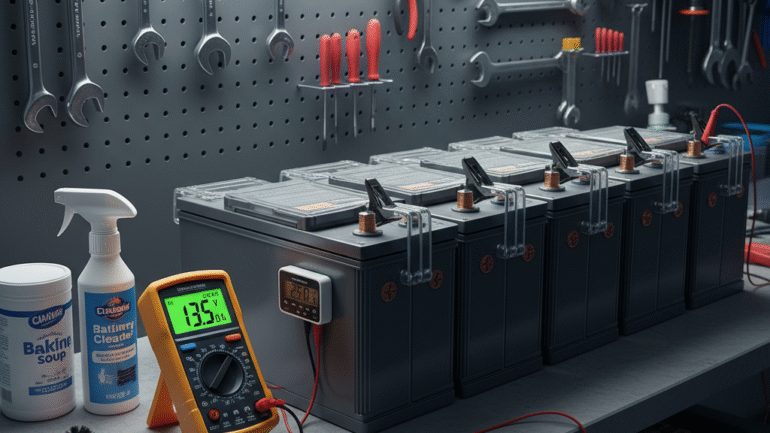
The first major indicator of battery replacement needs is voltage that drops dramatically when you turn on appliances. Specifically, healthy 12V batteries should maintain voltage above 12.0V under moderate loads. However, failing batteries may drop to 11V or lower immediately when stressed. Therefore, testing voltage under load reveals battery health better than no-load testing.
To test this properly, use a digital multimeter while running typical RV appliances like lights and fans. Additionally, compare readings to your battery’s specifications for acceptable voltage ranges. Furthermore, document these readings over time to track declining performance. Ultimately, consistent voltage drops below acceptable levels indicate replacement time.
How to Perform Load Testing
Start by fully charging your battery bank using your solar panels or shore power. Next, disconnect from charging sources and turn on several moderate-draw appliances simultaneously. Then, measure battery voltage at the terminals while appliances are running. Finally, healthy batteries should maintain voltage within 10% of their nominal rating.
Sign 2: Dramatically Reduced Runtime
Another clear sign requiring battery replacement is significantly shorter runtime between charges than when new. For instance, if your batteries previously powered your RV for 2-3 days, but now only last 12-18 hours, replacement time approaches. Moreover, this capacity loss often accelerates as batteries age further. Therefore, tracking runtime changes helps predict replacement timing.
Keep a simple log of how long your batteries power essential loads between charging cycles. Additionally, note any changes in your power consumption habits that might affect runtime. Furthermore, compare current performance to manufacturer specifications for capacity retention. Consequently, batteries retaining less than 80% of original capacity need replacement.
Environmental factors like temperature extremes can temporarily reduce capacity without permanent damage. However, consistent capacity loss across multiple seasons indicates true battery degradation. Meanwhile, proper winter storage can extend battery life significantly. Therefore, distinguish between temporary and permanent capacity reductions.
Sign 3: Physical Warning Signs
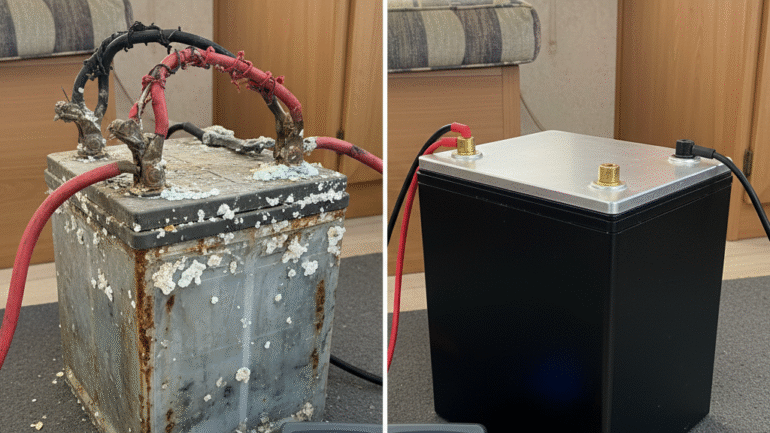
Visual inspection reveals important clues about battery health and replacement needs immediately. Specifically, look for bulging, cracking, or warping of the battery case structure. Additionally, white or blue-green corrosion around terminals indicates internal problems developing. Furthermore, any liquid leakage from sealed batteries signals immediate replacement requirements.
Check battery terminals regularly for excessive corrosion that cleaning cannot resolve completely. Moreover, loose or damaged terminal connections can mimic battery failure symptoms initially. However, persistent terminal problems often indicate internal battery issues requiring professional attention. Therefore, distinguish between maintenance issues and true battery failure.
Safety Considerations During Inspection
Always wear safety glasses and gloves when inspecting batteries for potential problems. Additionally, ensure adequate ventilation in your battery compartment during inspection and maintenance. Furthermore, never smoke or create sparks near batteries due to hydrogen gas production. Finally, dispose of damaged batteries properly at recycling centers or automotive stores.
Sign 4: Charging Problems and Inefficiency
Batteries requiring battery replacement often exhibit charging problems that solar charge controllers cannot resolve. For example, batteries may refuse to accept a full charge despite adequate sunlight and functioning panels. Additionally, charging may take significantly longer than normal even with optimal conditions. Therefore, monitoring charging behavior reveals battery health status accurately.
Watch for batteries that seem to charge quickly to 80% but then struggle to reach full capacity. Moreover, batteries that immediately drop voltage after charging stops likely have internal damage. Furthermore, excessive heat generation during charging indicates internal resistance problems developing. Consequently, these charging anomalies signal replacement needs before complete failure occurs.
Your charge controller may display error codes or warnings related to battery problems during operation. Additionally, some modern controllers provide battery health metrics and capacity estimates automatically. Meanwhile, understanding battery lifecycles helps you interpret these warnings correctly. Therefore, pay attention to all charging system feedback about battery performance.
Sign 5: Age and Maintenance History
Finally, battery age combined with maintenance history provides the clearest replacement timeline guidance available. Specifically, lead-acid batteries approaching 4-5 years old should be monitored closely for performance issues. Additionally, batteries that have experienced deep discharges, overcharging, or extreme temperatures age faster. Therefore, honest assessment of battery history predicts replacement needs accurately.
Keep records of battery purchase dates, maintenance performed, and any problems encountered over time. Moreover, factor in your RV usage patterns and storage conditions when estimating battery lifespan. Furthermore, proactive replacement prevents unexpected failures during important trips or extended off-grid stays. Ultimately, planning ahead ensures continuous power system reliability.
Making the Replacement Decision
When multiple warning signs appear simultaneously, replacement becomes the most cost-effective solution long-term. Additionally, replacing batteries before complete failure prevents potential damage to your solar charge controller and inverter. Furthermore, new batteries often provide improved capacity and efficiency compared to older technology. Therefore, view battery replacement as a system upgrade opportunity rather than just maintenance.
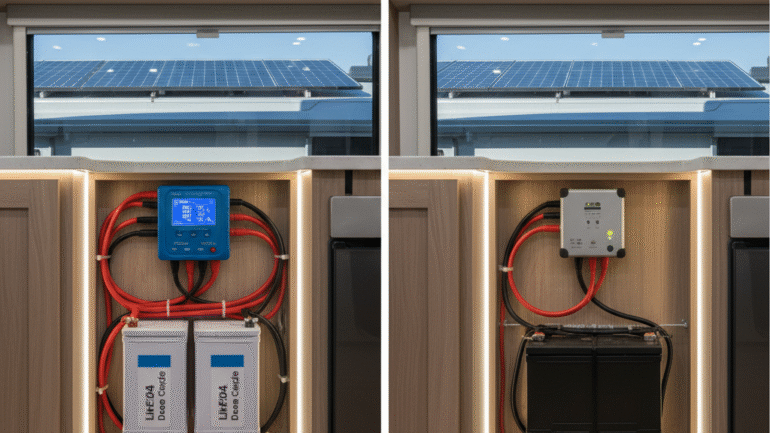
Consider upgrading to lithium batteries if your budget allows for the higher initial investment. Moreover, lithium batteries require less maintenance and provide more usable capacity than lead-acid alternatives. However, ensure your charging system is compatible with lithium battery requirements before making the switch. Finally, proper installation and initial setup maximize your new battery investment’s lifespan and performance.