Solar panel cleaning is essential for maintaining peak energy production in your home or RV installation. Dirty panels can lose 15-25% of their efficiency, directly impacting your power generation. This comprehensive guide covers the proper tools, techniques, and schedules to keep your panels performing optimally. Whether you’re cleaning ground-mounted arrays or rooftop installations, these proven methods will help maximize your solar investment.
Why Solar Panel Cleaning Matters for Performance
Dust, bird droppings, and debris create barriers that block sunlight from reaching photovoltaic cells. Even a thin layer of dirt can significantly reduce energy output. Furthermore, neglecting regular maintenance can lead to permanent staining or damage that requires costly panel replacement.
Location plays a crucial role in cleaning frequency requirements. Desert environments and areas near construction sites accumulate dust faster than coastal regions. Similarly, RV installations face unique challenges from road grime and varying environmental conditions during travel.
Clean panels not only produce more electricity but also last longer. Proper maintenance prevents hot spots that can damage individual cells. Additionally, regular cleaning allows you to inspect panels for cracks, loose connections, or other issues early.
Essential Tools for Safe Solar Panel Cleaning
Start with basic cleaning supplies that won’t scratch or damage panel surfaces. Soft-bristled brushes, squeegees, and microfiber cloths are your primary tools. Moreover, telescoping handles help you reach panels safely from ground level.
Use only mild, pH-neutral detergents mixed with distilled water for cleaning solutions. Avoid harsh chemicals, abrasive cleaners, or high-pressure washers that can damage panel coatings. Instead, gentle dish soap provides effective cleaning without harmful residues.
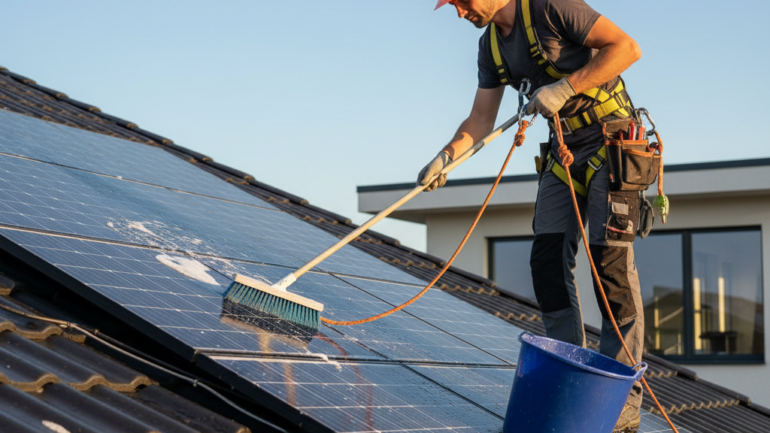
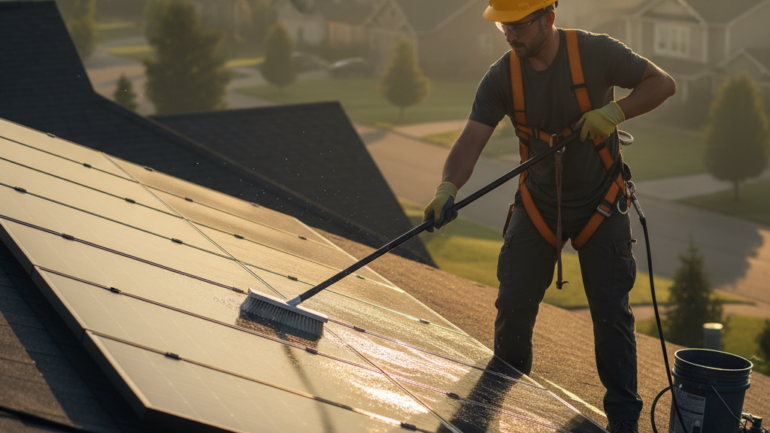
Safety equipment is non-negotiable for rooftop cleaning operations. Harnesses, non-slip shoes, and proper ladders prevent accidents. However, consider hiring professionals for steep or high installations rather than risking injury.
Temperature monitoring tools help you clean at optimal times. Digital thermometers or infrared guns ensure panels aren’t too hot during cleaning. Consequently, you’ll avoid thermal shock that can crack glass surfaces.
Step-by-Step Cleaning Technique
Begin cleaning during early morning or late evening when panels are cool to touch. Hot surfaces cause cleaning solutions to evaporate quickly, leaving streaks and residues. Therefore, timing your cleaning sessions prevents damage and improves results.
First, rinse panels with clean water to remove loose debris and dust. Use a garden hose with gentle spray settings, never high-pressure jets. Next, apply your cleaning solution using a soft brush or cloth with circular motions.
Work systematically across each panel, paying attention to heavily soiled areas. Bird droppings and tree sap require extra attention but respond well to gentle scrubbing. Subsequently, rinse thoroughly to remove all cleaning residues that could attract more dirt.
Dry panels with clean squeegees or allow air drying in shaded conditions. Avoid cleaning in direct sunlight, which causes rapid evaporation and streaking. Finally, inspect each panel for damage or issues requiring professional attention.
Cleaning Frequency Guidelines
Most residential installations benefit from quarterly cleaning, though environmental factors may require adjustments. Urban areas with heavy pollution need more frequent attention than rural locations. Additionally, seasonal changes affect cleaning schedules significantly.
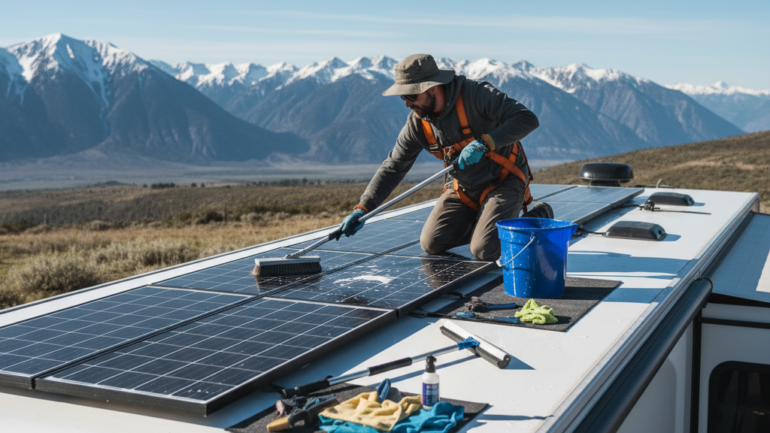
RV solar systems require cleaning after each trip or monthly during extended use. Road dust and insects accumulate quickly during travel, reducing efficiency immediately. Therefore, portable cleaning kits make maintenance convenient at any location.
Monitor your system’s energy production to determine optimal cleaning intervals. Sudden drops in output often indicate dirty panels needing immediate attention. Furthermore, understanding your personal solar load map helps you recognize when reduced efficiency impacts your power needs.
Weather patterns influence cleaning schedules significantly. Heavy pollen seasons, dust storms, or bird migration periods may require additional cleaning sessions. Conversely, regular rainfall in some regions provides natural cleaning between scheduled maintenance.
Common Cleaning Mistakes to Avoid
Never clean hot panels, as thermal shock can cause expensive cracking damage. Wait until early morning or evening when surface temperatures drop below 100°F. Similarly, avoid cleaning during freezing conditions when water can freeze and expand in panel frames.
Harsh chemicals and abrasive materials permanently damage anti-reflective coatings on panel surfaces. Steel wool, scouring pads, and strong solvents void warranties and reduce efficiency. Instead, stick to gentle cleaning methods that preserve panel integrity.
Walking directly on panels concentrates weight in small areas, potentially cracking cells underneath. Use proper walkways or avoid stepping on panels entirely. Moreover, dropping tools or equipment can cause immediate damage requiring expensive repairs.
Neglecting safety protocols leads to preventable accidents and injuries. Wet surfaces become extremely slippery, and electrical hazards exist around solar installations. Therefore, prioritize safety over speed during all cleaning operations.
Special Considerations for RV Solar Cleaning
RV installations face unique challenges from road debris, tree branches, and varying weather conditions. Flexible panels require extra care during cleaning to prevent delamination or surface damage. Additionally, limited roof access makes proper tool selection crucial for safe maintenance.
Pack lightweight, compact cleaning supplies that store easily in RV compartments. Collapsible brushes, concentrated cleaning solutions, and microfiber cloths minimize storage requirements. Furthermore, consider the availability of clean water when planning cleaning sessions at remote locations.
Inspect mounting hardware during each cleaning session, as road vibrations can loosen connections over time. Tighten screws and bolts as needed using appropriate tools. Consequently, this preventive maintenance prevents costly repairs and ensures reliable power generation while traveling.
Professional vs DIY Cleaning Decision
Consider professional services for high, steep, or complex installations where safety risks outweigh cost savings. Professional cleaners have specialized equipment and insurance coverage for challenging cleaning situations. Moreover, they can identify potential issues that untrained eyes might miss.
DIY cleaning works well for ground-mounted systems and easily accessible installations. Most homeowners can safely maintain these systems with proper tools and techniques. However, following essential safety checks remains crucial even for simple cleaning operations.
Calculate the cost-benefit ratio of professional versus DIY maintenance over time. While professional cleaning costs more upfront, preventing damage through proper techniques may save money long-term. Additionally, warranty requirements sometimes specify professional maintenance for coverage validation.
Maximizing Your Investment Through Proper Maintenance
Regular solar panel cleaning represents a small investment that pays significant dividends in energy production. Clean panels generate 15-25% more electricity than dirty ones, directly impacting your energy savings. Furthermore, proper maintenance extends panel lifespan and preserves warranty coverage.
Document your cleaning schedule and energy production data to track maintenance effectiveness. This information helps optimize cleaning frequency and identifies when additional attention becomes necessary. Additionally, maximizing efficiency before expanding your system ensures you get the most from your existing investment.
Combine cleaning with regular system inspections to catch problems early. Check connections, mounting hardware, and inverter performance during each maintenance session. Therefore, comprehensive maintenance prevents small issues from becoming expensive repairs later.
Remember that clean panels are just one component of an efficient solar system. Proper sizing, quality components, and regular maintenance work together to maximize your renewable energy investment. Consequently, treating panel cleaning as part of comprehensive system care ensures optimal long-term performance.