Getting your solar panel sizing right is the foundation of any successful DIY solar project. Moreover, accurate calculations prevent costly oversizing or frustrating undersizing issues. Furthermore, proper sizing ensures your system delivers reliable power when you need it most. This comprehensive guide walks you through calculating your home’s energy needs step by step.
Understanding Your Current Energy Consumption
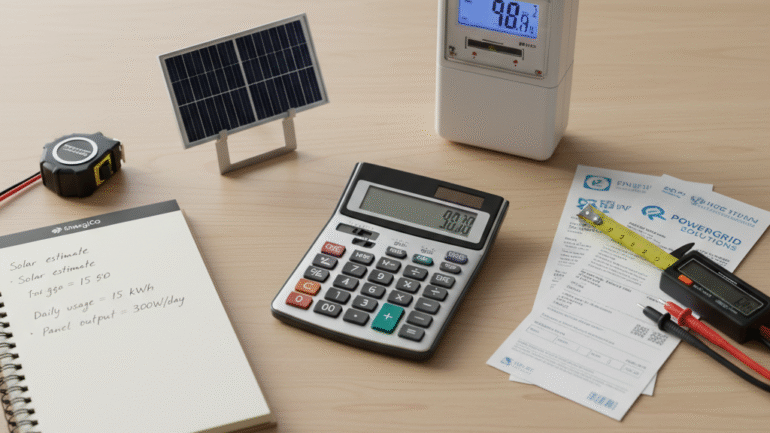
First, gather your electric bills from the past 12 months to identify usage patterns. Additionally, look for the kilowatt-hour (kWh) readings on each monthly statement. Subsequently, calculate your average monthly consumption by adding all 12 months and dividing by 12. However, seasonal variations matter significantly for accurate solar panel sizing.
Next, identify your highest and lowest usage months to understand peak demand periods. Furthermore, winter months typically show higher consumption due to heating needs. Conversely, summer peaks often reflect air conditioning usage. Therefore, consider both extremes when planning your system capacity.
Meanwhile, daily consumption calculations provide more practical sizing guidance than monthly averages. Simply divide your monthly kWh by 30 days for a baseline estimate. However, actual daily usage varies considerably based on weather and lifestyle factors. Consequently, adding a 20-30% buffer to your calculations ensures adequate coverage.
Identifying High-Consumption Appliances
Major appliances significantly impact your total energy requirements and solar panel sizing needs. Specifically, refrigerators, water heaters, and HVAC systems consume the most electricity. Additionally, understanding each appliance’s power draw helps prioritize your solar coverage goals. Therefore, create a comprehensive appliance inventory with wattage ratings.
Electric water heaters typically consume 3,000-4,500 watts during heating cycles. Similarly, central air conditioning systems draw 2,000-5,000 watts continuously during operation. Meanwhile, refrigerators use 100-400 watts but run constantly throughout the day. Consequently, these three appliances often represent 60-70% of total home consumption.
Furthermore, smaller appliances add up quickly when used simultaneously throughout the day. For example, microwaves, dishwashers, and clothes dryers create significant peak demand periods. However, strategic usage timing can reduce your required system capacity substantially. Therefore, consider efficiency improvements before finalizing your solar specifications.
Calculating Appliance Runtime Hours
Accurate runtime estimates are crucial for determining actual daily energy consumption patterns. Additionally, most appliances don’t run continuously, so duty cycle calculations matter significantly. Furthermore, seasonal variations affect runtime hours for heating and cooling equipment substantially. Therefore, track usage patterns during different times of year.
Water heaters typically run 3-4 hours daily in average households with moderate usage. Meanwhile, refrigerators cycle on approximately 8-12 hours per day depending on efficiency ratings. However, air conditioning runtime varies dramatically from 2-16 hours based on climate conditions. Consequently, location-specific calculations are essential for accurate sizing.
Solar Production Calculations and System Sizing
Solar production depends heavily on your location’s average daily sun hours throughout the year. Moreover, seasonal variations significantly impact system performance and required capacity calculations. Furthermore, panel orientation and shading conditions affect actual power generation substantially. Therefore, use conservative estimates when calculating your solar panel sizing requirements.
Most locations receive 3-7 peak sun hours daily, with southwestern regions achieving higher averages. Additionally, winter months typically provide 30-50% less solar production than summer peaks. However, understanding real sun hours helps create realistic expectations for system performance. Consequently, size your system for worst-case winter production scenarios.
Calculate required panel wattage by dividing daily kWh needs by average sun hours. For instance, 30 kWh daily consumption divided by 4 sun hours requires 7,500 watts capacity. However, system losses from inverters, wiring, and temperature reduce actual output by 15-25%. Therefore, multiply your calculated capacity by 1.25 to account for these efficiency losses.
Battery Storage Considerations
Battery capacity calculations require understanding your backup power duration goals and critical load requirements. Additionally, battery depth of discharge limits affect usable capacity significantly for system longevity. Furthermore, temperature conditions impact battery performance and required capacity substantially throughout the year. Therefore, include safety margins when sizing your battery bank.
Most homeowners target 1-3 days of backup power for essential circuits during outages. Meanwhile, full-home backup systems require substantially larger battery investments and careful load management. However, focusing on critical loads like refrigeration, lighting, and communications reduces required capacity significantly. Consequently, prioritize your most important electrical needs first.
Practical Sizing Examples and Formulas
A typical 1,500 square foot home consumes 25-35 kWh daily depending on efficiency measures. Moreover, this consumption requires approximately 6,000-10,000 watts of solar capacity in most climates. Furthermore, adding battery backup increases system complexity and cost substantially for complete energy independence. Therefore, consider starting with phased installation approaches for budget management.
RV solar systems typically require 400-1,200 watts depending on appliance usage and travel patterns. Additionally, RV installations face space constraints that limit maximum panel capacity significantly. However, efficient appliances and careful energy management reduce required system size substantially. Consequently, focus on essential loads like lighting, refrigeration, and device charging first.
Emergency backup systems can operate effectively with just 1,000-3,000 watts for critical loads only. Meanwhile, these smaller systems cost significantly less while providing essential outage protection capabilities. Furthermore, portable backup stations offer flexibility for renters and temporary installations effectively. Therefore, match your system size precisely to your actual power requirements and budget constraints.
Common Sizing Mistakes to Avoid
Oversizing systems wastes money without providing proportional benefits for most residential applications effectively. Additionally, undersized systems create frustration and limit your energy independence goals significantly throughout the year. Furthermore, ignoring seasonal production variations leads to winter performance disappointments and backup power issues. Therefore, balance capacity, cost, and realistic expectations carefully.
Many beginners forget to account for system efficiency losses when calculating required panel capacity. Moreover, battery sizing mistakes create either inadequate backup duration or excessive upfront investment costs. However, proper load analysis and realistic usage projections prevent most common sizing errors effectively. Consequently, spend adequate time on calculations before purchasing equipment.
Final System Verification and Adjustments
Monitor your actual energy usage for several months before finalizing equipment purchases for accuracy. Additionally, seasonal variations may reveal different capacity requirements than initial calculations suggested originally. Furthermore, lifestyle changes and new appliances can significantly impact your solar panel sizing requirements over time. Therefore, design systems with reasonable expansion capability for future growth.
Professional energy audits provide detailed consumption analysis and efficiency improvement recommendations before installation. Meanwhile, smart home monitoring systems offer real-time usage data for more accurate sizing calculations. However, basic utility bill analysis provides sufficient information for most DIY solar projects effectively. Consequently, match your analysis depth to your project complexity and available resources.
Start with essential loads and expand your system capacity gradually as budget allows. Moreover, this phased approach reduces initial investment while providing immediate backup power benefits. Furthermore, hands-on experience with smaller systems builds confidence for larger installations over time. Therefore, begin your solar journey with properly sized starter systems that meet your most critical needs first.