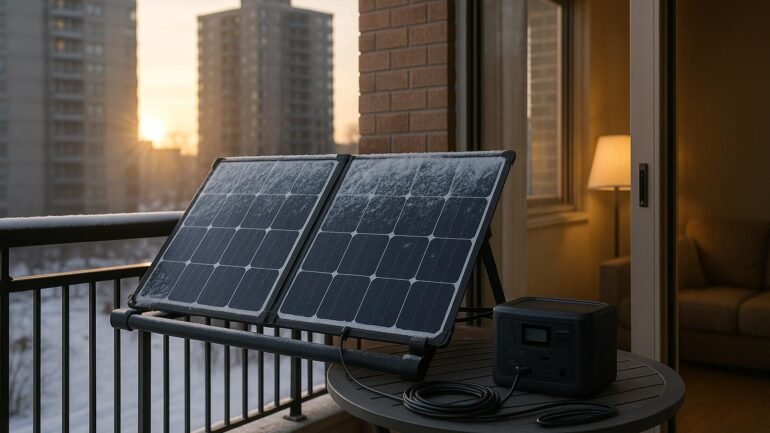
Why renters need portable solar backup (no roof required)
In apartments and rentals, rooftop solar is often out of reach, but reliable power is essential—especially during winter outages or cold snaps. A renter-friendly portable solar backup provides roof-free energy you can move with you, backing up essential loads, charging devices, and running a compact fridge during emergencies without permanent changes to the building.
How portable solar systems work for renters
Core components: panels, portable power stations, batteries, inverters
A simple, modular kit pairs foldable solar panels with a battery storage unit (power station) and a lightweight inverter. The goal is a portable setup you can deploy on a balcony, by a sunny window, or in a shared sunlit area—without permanent installation.
- Foldable or compact panels that are easy to store when not in use.
- A battery storage unit (power station) with multiple outputs (USB, DC, AC).
- A built-in or external inverter that delivers clean, safe power for common devices.
- Flexible charging options: direct sun, wall outlets, or a car charger for topping up on the go.
- Simple monitoring: LED indicators or a companion app to track charge levels and output.
When sized for essential loads—phone, tablet, lighting, a small router, and possibly a compact fridge—you get predictable performance without guessing capacity.
Winter-specific considerations: how cold, short days change the game
Winter tests your system with shorter days, lower sun angles, and potential snow or clouds. Batteries also behave differently in cold weather, often delivering less usable capacity and slower charging.
- Sun angle and daylight: tilt panels toward the south and target peak sun hours (roughly 10 a.m. to 2 p.m.).
- Cold battery performance: lithium-based packs lose capacity in the cold. Plan for a buffer so you don’t run out on cloudy days.
- Snow, ice, and shade: keep panels clear of snow and avoid obstructions that shade them. Even light snow can cut output.
- Energy discipline: limit high-draw loads and prioritize essential devices during shorter daylight hours.
Bottom line: winter calls for larger usable capacity, charging during peak sun, and strategies to keep batteries warm and efficient.
Gear options for renters
Gear choices depend on space, usage, and budget. Here are practical options that balance cost, portability, and reliability.
- Portable solar panels
- Foldable 60–200W panels are common and easy to stash on a balcony or behind furniture.
- Monocrystalline panels perform well in low light and cold conditions.
- Packs with integrated stands or tiltable mounts help optimize winter exposure.
- Power stations / battery packs
- Capacity: 300–1000Wh suits most apartments; 1000–2000Wh covers longer outages or higher loads.
- Multiple outputs: AC, USB-C, USB-A, 12V outlets for versatility.
- Smart features: efficient charge/discharge monitoring, MPPT charging, and pass-through charging.
- Inverters and charging options
- Built-in or external inverters; pure sine wave is best for sensitive electronics.
- MPPT controllers help maximize winter sun capture.
- Additional charging methods (wall outlet, car adapter) provide flexibility when sun isn’t available.
- Mounting and safety accessories
- Temporary panel mounts or freestanding stands to angle panels toward the sun.
- Weatherproof bags and cable organizers to reduce trip hazards on balconies.
Setup strategies for balconies and common areas
Private roofs aren’t always available, so plan compliant, safe placements that maximize sun and minimize risk.
- Balcony setup
- Mount panels on a railing or a small freestanding stand that won’t obstruct space or violate rules.
- Tilt panels toward the sun; in winter, increase tilt to compensate for the lower sun angle.
- Use non-slip mats or weights to secure stands; avoid damaging railings or tiles.
- Common areas and shared spaces
- Ask for permission to use a sunny window or a designated sunlit corner. Create a portable charging station in a bright spot.
- Keep cables neat and away from walkways with clips or ties to prevent trips.
- Choose a compact setup you can move to a brighter window if needed.
- Indoor near-window operation
- Position the power station close to a sunny window while ensuring adequate ventilation.
- Avoid placing near radiators or cold exterior walls that dampen performance.
- Safe handling and power management
- Avoid cords across doors or high-traffic paths; use cable management tools.
- Store panels and the battery in a cool, dry place when not in use.
- Follow manufacturer safety guidelines, including ventilation when charging in enclosed spaces.
Winter-ready tips to maximize output and battery life
Use these practical tips to boost performance during the cold months.
- Optimize tilt and orientation: a steeper winter tilt reduces snow buildup and improves sun capture.
- Keep the battery within a healthy temperature range; ventilate and avoid sealed closets when charging.
- Pre-charge during peak sun: aim for full charge by early afternoon and ration usage for evenings.
- Prioritize load shifting: charge devices during daylight; run only essential devices with LED lighting and energy-efficient appliances.
- Use energy-efficient devices: low-wattage lamps and compact chargers extend runtimes.
- Keep panels clear of snow and ice: brush off snow with a non-metallic tool to maximize sunlight.
- Battery care basics: avoid deep discharges; keeping 20–80% state of charge extends cycle life.
- Redundancy matters: consider a second smaller battery or an extra panel for critical loads.
Budgeting and planning for a renter-friendly setup
Smart budgeting helps you balance reliability with upfront cost. Consider these ranges and strategies.
- Green-light gear price ranges
- Portable panels: roughly $150–$400 for a compact 60–200W setup.
- Power stations: about $150–$800 for 300–1000Wh; $800–$1500 for 1000–2000Wh with faster charging and more ports.
- Extras: weatherproof bags, mounts, cables, and cases: $20–$100.
- Cost vs. resilience
- A mid-range 600–1000Wh battery with 100–200W panel suits most daily essentials for several hours daily.
- Higher-capacity kits pay off during longer outages or larger loads (mini-fridge, router) over multiple days.
- Rent-friendly budgeting strategies
- Buy refurbished or gently used components from reputable sellers with warranty checks.
- Adopt a modular approach: start small, then add a panel or battery as needs grow.
- Explore rental or lease options for higher-end kits if upfront costs are a barrier, ensuring your lease allows portable systems.
- ROI and ongoing costs
- Estimate monthly outage savings and essential-load resilience during storms.
- Account for maintenance, battery replacement, and potential shipping or warranty costs.
Maintenance and troubleshooting
Regular care keeps your portable solar setup ready when you need it most. Follow a simple routine to avoid surprises during outages.
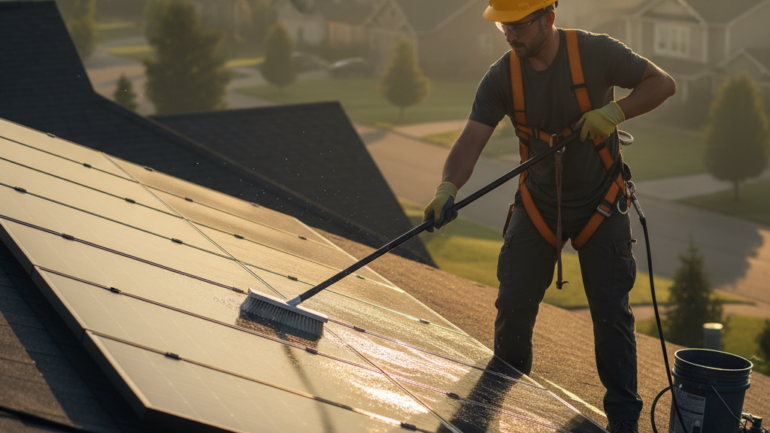
- Regular checks: inspect panels for debris, clean with a soft brush, and secure connectors.
- Monitor performance: use the built-in display or app to track charge levels and input/output.
- Test before use: run a small load after cloudy periods to verify the system works as expected.
- Protect from the elements: use weatherproof covers and store gear in a dry place, especially during storms.
- Know when to upgrade: if you consistently run out of power, consider more capacity or an extra panel.
With thoughtful planning, portable solar power for renters delivers solid, winter-ready performance without roof access or permanent installs. The key is flexible gear, safe spaces, and practical winter charging habits.