Introduction
Winter solar is often misunderstood. As days shorten, many wonder if solar is worth the investment when daylight is scarce or cold can seem to sap performance. The answer isn’t binary. Winter results depend on how you design, size, maintain, and operate your system through the season. This guide tackles winter solar myths head-on and offers practical fixes so new adopters keep projects cost-effective and efficient when the sun wanes.
Throughout, you’ll see the recurring idea that winter solar myths are just misconceptions about cold weather. The fixes below are practical, grounded in how solar technology behaves in winter conditions.
Myth 1 – Winter sun is too weak for solar to be worth it
What the myth gets wrong and practical fixes
Shorter days and lower sun angles during winter don’t automatically doom solar gains. Winter energy production depends on irradiance, panel temperature, and daylight hours. Panels operate more efficiently at cooler temperatures, so meaningful energy is still harvestable on sunny, cold days. The real limiter is daylight duration and cloud cover, not the cold itself.
- Reassess local winter production using weather data and historical solar data. You may be surprised by higher output on clear, cold days.
- Adjust tilt to boost winter exposure. In the northern hemisphere, tilt about 10–15 degrees above your latitude can improve winter capture and help snow shedding.
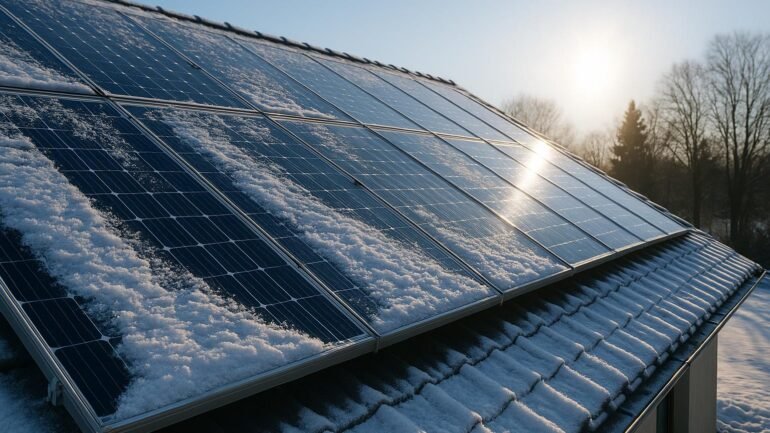
- Keep panels clear of heavy snow when safe. Gentle removal can reduce output losses from shading, but never risk safety by climbing on panels.
- Leverage monitoring to spot seasonal dips and confirm winter production spikes when conditions allow.
- Consider storage or flexible usage. If winters are consistently low-light, pairing solar with a battery or demand-response plan can improve utilization.
Myth 2 – Panels perform poorly in cold temperatures
Why cold can help efficiency and how to manage
Cold can actually boost panel efficiency because photovoltaic cells operate more efficiently at lower temperatures. However, frost, snow, and dew can temporarily reduce output. Proper design and management help you harvest the upside while mitigating the downsides.
- Plan for cold-related losses. Expect brief dips during frosty mornings and rapid recoveries as temps rise and the sun strengthens.
- Use winter-optimized tilt and spacing to maximize sun exposure and facilitate snow shed.
- Keep arrays clear of ice and ensure safe snow management. If safe, gently remove fresh snow to restore output quickly.
- Monitor performance to verify winter gains and identify any unusual drifts in output.
- Protect electronics from moisture. Ensure enclosures and seals remain water- and ice-resistant for reliable year-round operation.
Myth 3 – More panels always means more winter energy
Sizing and derating in a winter context
The instinct to add panels for winter is common, but winter conditions also bring derating effects and shading risks. Proper sizing requires accounting for shorter days, snow coverage, and temperature coefficients to prevent waste and ensure cost-effective performance.
- Model winter irradiance, snow clearance potential, and your heating load to determine true needs.
- Consider derating factors and temperature coefficients to avoid overestimating winter output.
- Balance array size with storage and grid-tied options to maximize usable energy during long nights.
- Use microinverters or optimizers to minimize shading losses and improve winter performance on imperfect layouts.
Myth 4 – Battery storage is unnecessary in winter
Role of storage in smoothing winter dips
Storage isn’t just for off-grid or summer-heavy systems. In winter, batteries smooth daily and seasonal variability, cover longer nights, and guard against outages. Cold affects battery chemistry, so choosing the right chemistry and thermal management is key.
- Size storage to winter consumption and solar production. Extra capacity helps with longer nights and high-demand evenings (heating, hot water).
- Choose cold-rated chemistries with robust thermal management and smart BMS features.
- Place batteries in temperature-controlled spaces when possible (insulated shed, garage, or indoor area with gentle heating).
- Adopt smart charging strategies: charge when solar is available, discharge during peak demand to maximize winter sun value.
- Be prepared for very cold snaps. Some systems auto-limit charging to protect the battery; plan around that with daylight buffering or grid power as a backup.
Myth 5 – Maintenance is optional in winter
Essential winter maintenance tasks
Maintenance often drops in winter, but cold stress, freeze-thaw cycles, and ice can exacerbate issues. Regular checks keep the system safe and reliable when power is most needed.
- Inspect electrical connections for corrosion or looseness; tighten and replace as needed.
- Check inverter ventilation and ensure proper cooling; ensure adequate airflow in cold weather.
- Look for ice dams and ensure water drains away from key components.
- Test data monitoring and alerts to catch abnormal swings early.
- Inspect cables and enclosures for brittleness; replace damaged sections before they fail in severe cold.
Practical winter optimization: steps for beginners
Turn ideas into action with a simple winter-readiness checklist. Reassess your location’s winter production, optimize tilt, ensure safe snow management, set up reliable monitoring, and align storage with your winter load profile. A little foresight now saves time and trouble later.
Resources and next steps
Use seasonal benchmarks, manufacturer guidance, and local climate data to refine your plan. Start with a winter readiness check, run the numbers for your location, and set a concrete season-wide plan.