Why winter sun and weather matter for ground-ready panel placements
Understanding winter sun angles and daylight hours
Winter sun sits lower in the sky and daylight hours shrink, directly affecting energy production for any ground-mounted or ground-ready setup. Low sun angles mean the array captures less of the sky and shadows from nearby structures lengthen, so even a well-installed system can see reduced output during the coldest months. For ground-mounted solar panel placement, tilt and orientation become more critical than in summer. Shadows from fences, buildings, and trees extend farther, and a single misalignment can cut production. The goal is to maximize exposure during the hours the sun is available, even if those hours are brief.
- Sun angle relative to your site’s latitude
- Local weather and cloud cover patterns
- Nearby obstructions that cast longer shadows in winter
- East–west orientation tradeoffs for morning vs. afternoon production
Snow load and accumulation: solar panel snow load guidelines
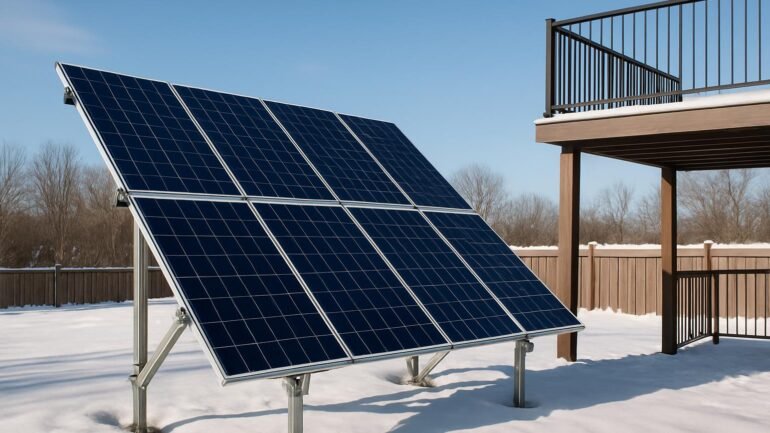
Snow accumulation is a winter reality that can silence a system if panels stay buried. For ground-ready deployments, snow load isn’t just about weight—it’s about how quickly snow sheds to restore exposure after storms. Flat or shallow tilts hold snow longer, reducing output beyond the weight alone. Ground-mounted layouts often offer easier snow management and clearance than rooftops, but the risk remains. A tilt that promotes shedding helps keep cells above the white blanket. Regular inspection after heavy snowfall ensures mounts, fasteners, and wiring stay secure.
- Tilt your array to promote snow shedding
- Leave safe, clear paths to access panels without damage to wiring
- Inspect racking bolts after storms for signs of loosening
- Consider snow guards or wind shields in heavy-drift locales
- Monitor output after storms to confirm quick rebound
Orientation and tilt in winter for balconies, fences, and ground mounts
Winter orientation balances practical constraints with energy goals. Tilt closer to your latitude, and in some setups add a modest 10–15° to capture lower winter sun. Balconies and fences impose safety and clearance limits, so you’ll often trade ideal angles for practicality.
Configuration notes
- Balcony: Safety and railing heights constrain tilt. Use an adjustable, secure tilt and prioritize south-facing exposure where possible. East-facing balconies favor morning production; west-facing provides strong late-day output.
- Fence: A sturdy fence can host a fixed-angle mount, ensuring maintenance clearance and avoiding fence shadows. If space allows, stagger panels with small angular offsets to broaden sun-path coverage in winter.
- Ground mounts: Offer the most flexibility. Use a winter-optimized tilt (often latitude plus a modest offset) and periodic re-tilt as seasons shift. Ensure spacing for airflow and easy snow shedding.
Weatherproofing and durability
Winter weather demands components that withstand moisture, freezing temperatures, wind, and rapid temperature swings. Weatherproofing is essential to protect long-term output.
- Corrosion-resistant mounting hardware rated for freeze–thaw cycles
- Sealed conduit runs and water-tight junction boxes; check seals after storms
- Robust module frames and good low-temperature performance
- Drainage-friendly cable routing to prevent ponding and ice buildup
- Clear debris around the mounting area that could trap moisture
Practical strategies to maximize output when daylight is scarce
Winter efficiency comes from making the most of limited sun. Consider these actions to boost winter solar panel efficiency on ground-ready installations.
- Prioritize south-facing orientation and tilt near latitude within safety and shade limits
- Use microinverters or optimizers to minimize shading losses per panel
- Keep panels clean and free of frost; gentle brushing on warm days helps
- Choose higher-efficiency modules that perform better in low light
- Schedule maintenance for clearer weather to minimize downtime
- Consider battery storage to shift daytime surplus to night use, if cost-effective
- Winter tracking gains are typically modest in cold, cloudy climates; fixed-tilt with optimized angle is often best
Maintenance tips for winter performance
Winter maintenance is about timely checks rather than frequent overhauls. Short, proactive cycles pay dividends in snow-prone or low-sun environments.
- Inspect mounting hardware after heavy storms for loosened bolts
- Check seals around enclosures and conduit entries for ice ingress
- Ensure no debris buildup shading panels or trapping moisture
- Verify electrical connections remain tight and corrosion-free
- Test performance on clear winter days to confirm outputs
- Log snow removal timing and output changes to refine next season’s plan
Case studies by configuration: balcony, fence, and ground-mount setups
Real-world layouts illustrate how winter-focused principles translate into action.
- Balcony: Compact, elevated tilt within safety limits; shade from nearby rails minimized; modular panels allow quick repositioning as constraints change
- Fence: Weatherproof angle brackets with a tilt that avoids edge shadows; easy maintenance access; staggered panels can capture more winter sun
- Ground mounts: Flexible tilts, deeper footings, preserved spacing for airflow and snow shed; plan drainage to prevent footing erosion
Putting it all together: a winter-ready plan for ground-ready installations
A practical plan starts with site assessment and ends with a maintenance routine that keeps performance through the cold season.
- Map sun paths across winter to identify the least-shaded orientation
- Choose a tilt that balances winter gains with balcony, fence, or ground constraints
- Select weatherproof components and ensure sealed connections
- Plan snow management: access routes, shedding angles, and routine checks
- Implement monitoring to track performance and respond to anomalies quickly
The concept of ground-mounted solar panel placement should guide your decisions—angle, orientation, and weatherproofing are driven by winter performance realities. Consider starting with the most strategic ground-ready sections and expanding after validating performance and maintenance routines. With thoughtful design, clear maintenance, and a focus on winter sun and weather, your installation can deliver steady energy through the cold season.