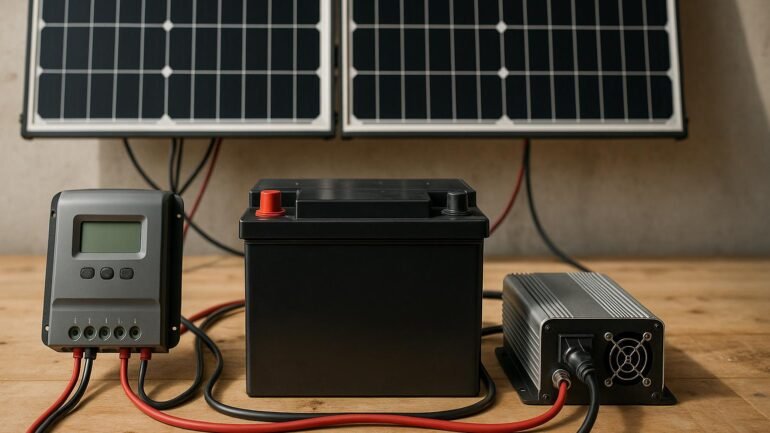
How Panels, Batteries, Inverters, and Controllers Really Fit Together
Getting started with a solar setup can feel overwhelming. This guide explains how the four major parts fit together in a starter system and what to verify before you buy.
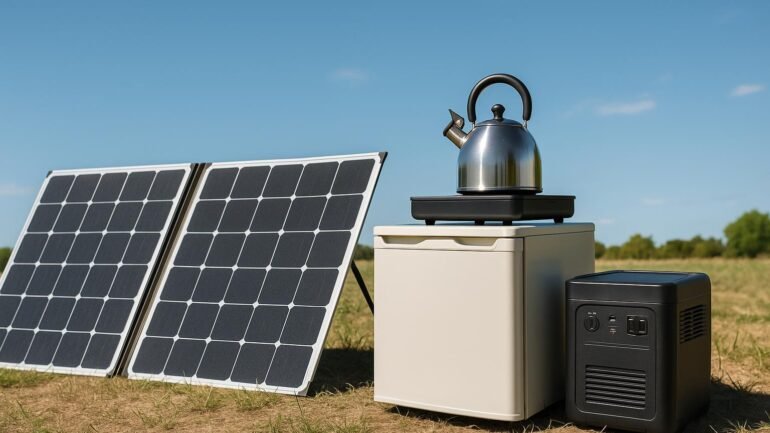
The core flow from sun to load is simple: solar panels generate DC power, a charge controller manages charging, a battery bank stores energy, and an inverter converts DC into usable AC for your devices. In a small system, you’ll typically configure for 12V or 24V operation, with components sized to work together for a reliable, low-maintenance setup.
Power electronics must match voltage, current, and charging profiles. If the panel array is too large for the controller, charging becomes inefficient or dangerous. If the controller can’t deliver enough current for the battery, you waste potential energy and shorten runtime.
Core flow: sun to load
The typical path in a starter kit is: solar panels → charge controller → battery bank → inverter → loads. Choose a controller that supports your panel voltage and current, a battery bank that matches the controller’s voltage, and an inverter sized for your expected loads. Always plan for safe wiring, proper fusing, and adequate ventilation.
Understanding battery chemistry helps avoid common mismatches. For a practical overview, see battery chemistry guide.
Looking for a realistic, ready-to-build plan? The 48-Hour Solar Sprint offers a concrete path to a safe, scalable backup you can complete this weekend. the 48-Hour Solar Sprint.
Seeing real-world layouts can help you design your own. Check out start-small solar case studies to learn how other DIYers pair modules with storage and inverters. start-small solar case studies.
For RV owners and portable setups, sizing your system correctly matters. A practical RV sizing guide walks you through picking panels, batteries, and a small inverter. RV solar sizing guide.
Simple starter checklist
- Define your essential loads (fridge, lights, communication gear).
- Choose a battery chemistry that fits your budget and maintenance tolerance.
- Size the panel array and the controller to match voltage and current needs.
- Pick an inverter with enough continuous and surge wattage, plus proper ventilation.
- Plan wiring, fusing, and safety grounding, then document all specs for maintenance.